A good hiking backpack keeps your gear organised and comfortable to carry. Whether you are planning a day hike in Sri Lanka or a longer camping trip, here are five things to check before buying.
1. Choose a size that suits your trip
Backpack capacity is measured in litres. More space is useful only if you need it.
| Trip type | Capacity to consider |
|---|---|
| Short hike with a few essentials | 10–20L |
| Full-day hike | 20–35L |
| Overnight or weekend camping | 30–50L with compact gear |
| Several days carrying camping equipment | 50–80L |
These are starting points. Your food, water, clothing and camping equipment determine how much space you need. Make a packing list before choosing a bag. Backpack sizing guide
2. Put comfort before appearance
Try the backpack with some weight inside. Adjust the straps and walk around. It should feel stable without digging into your shoulders.
For heavier loads, look for a supportive hip belt and internal back support. Some backpacks use metal stays or a back plate to help keep the bag stable and transfer weight towards your hips. Check the model’s construction, as not every backpack has this support. Check the fit against your torso length—the length of your back—not just your height. A padded back panel with airflow can also help on warm walks.
3. Check protection from rain
Water-resistant fabric does not always mean the whole backpack is waterproof. Rain may enter through seams and zips.
Check whether a rain cover is included. Keep your phone, spare clothes and sleeping gear inside waterproof dry bags or a suitable pack liner for extra protection. Backpack features guide
4. Look for useful pockets
Choose a layout that makes your essentials easy to reach. Water-bottle pockets, a small pocket for snacks and space for a rain jacket are useful.
If you prefer drinking through a tube, check whether the bag supports a hydration bladder—and whether the bladder is included. More pockets are not always better; choose what you will actually use. Daypack buying guide
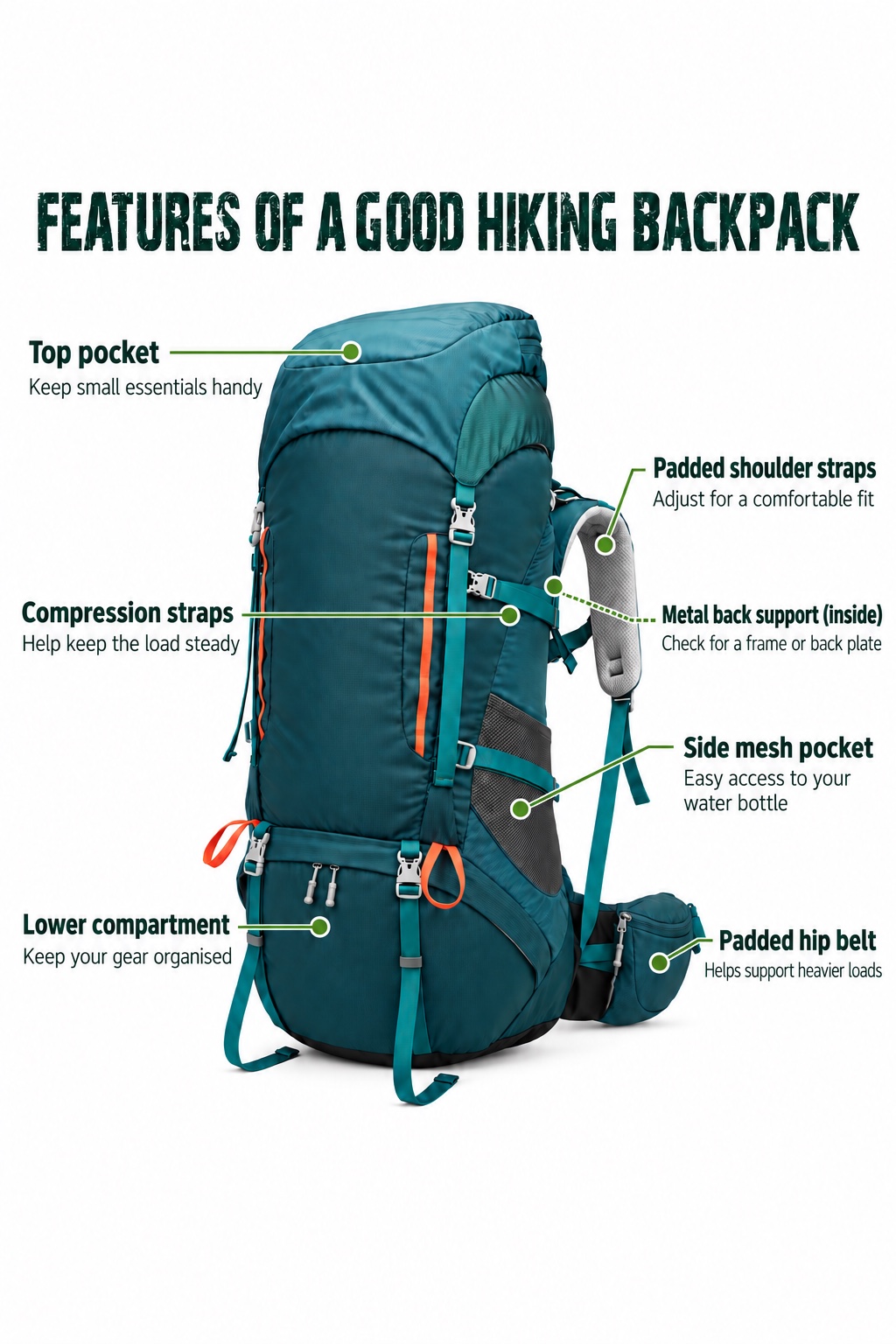
Comfort: Adjustable padded shoulder straps help you get a comfortable fit. A well-fitting hip belt helps support heavier loads.
Back support: Check for an internal frame, metal stays or a back plate when carrying heavier gear.
Stability: Compression straps tighten around your packed gear to help reduce movement.
Easy access: Top and side pockets keep small items and water handy. A lower compartment can help organise your gear.
5. Check quality and value
Look closely at the stitching, zips, buckles and strap attachments. Check the empty weight too, as the bag itself adds to your load.
Before paying, confirm what is included and ask about the return policy and any warranty terms.
One last tip: Pack your bag and take a short practice walk before your trip. This gives you time to adjust the fit and remove unnecessary items.
Looking for hiking backpacks in Sri Lanka? Explore TentMaster’s bags and backpacks and compare the sizes and features for your next adventure.