A comfortable camping trip starts with a tent that suits your campsite. This camping tent buying guide focuses on what matters in Sri Lanka: tropical rain, humid nights, insects and cooler conditions in the hills. Here are five things to check before buying.
1. Match the tent to your campsite
Sri Lanka’s rainfall varies by region and monsoon period, while the central highlands are cooler than the lowlands. Choose for your destination and travel dates, and check the local forecast before leaving. Sri Lanka’s climate overview
| Your camping plan | What to prioritise |
|---|---|
| Warm lowland or coastal campsite | Good airflow, insect mesh and protection from showers |
| Cooler hill-country campsite | Rain protection, a stable pitch and adjustable ventilation |
| Hiking to camp | Low packed weight and a compact carry bag |
| Family camping near your vehicle | Usable sleeping space, headroom and easy access |
A tent provides shelter; pack suitable bedding and warm layers for cooler nights.
2. Check the floor size, not just the person count
A “four-person” label usually describes sleeping capacity, not generous space for four people and their luggage. Compare the inner floor dimensions with your sleeping mats or airbed, and leave room to enter and move around.
For two adults wanting more room, a three-person model is worth comparing, provided the extra weight suits your trip. Check sitting height too. A covered entrance area, called a vestibule, is useful for muddy boots and wet gear. Tent sizing and space guide
3. Look beyond the word “waterproof”
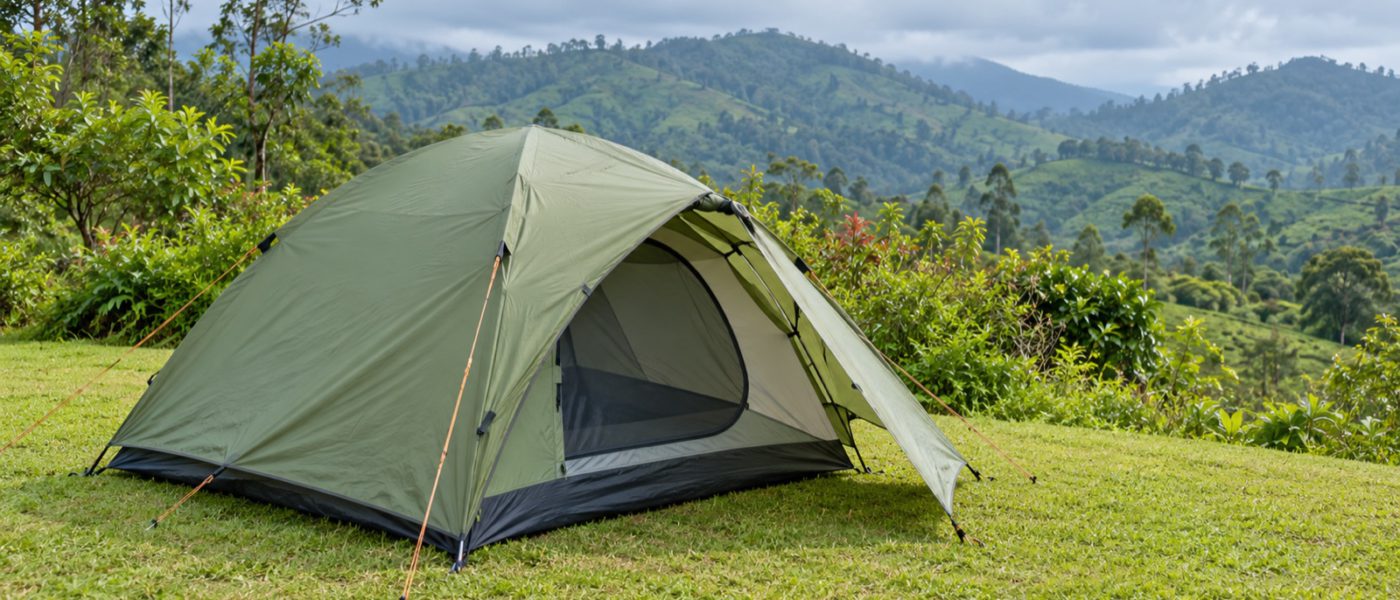
For overnight trips where rain is possible, a well-ventilated double-layer tent is a sensible starting point. Its outer rainfly sheds rain, while the inner tent provides the sleeping space.
Look for a rainfly that covers the sides, sealed or taped seams, and a waterproof floor with raised edges. A small roof cover offers less protection from wind-driven rain. Check that the fly stays clear of the inner tent when pitched. Rainfly and tent construction guide
Waterproof ratings in millimetres measure fabric resistance to water pressure. They are not a promise of how many hours a tent can handle rain. Ask about both flysheet and floor ratings; seams, condition and correct setup matter too. Waterproof ratings explained
4. Make airflow a priority
Look for mesh doors or windows and vents that can stay open while the rainfly is fitted. Insect mesh lets air circulate while helping keep mosquitoes outside.
Moisture from breathing can condense on cool tent fabric, so droplets inside do not always mean a leak. Keep ventilation open as conditions allow and avoid pressing bags against the inner walls. Airflow helps reduce condensation, but may not eliminate it on humid nights. How tent ventilation works
5. Check carrying weight, setup and value
If you will walk to camp, compare the complete packed weight, including poles, pegs and rainfly. Quick-opening tents can be convenient, but check their packed dimensions and practise folding them away.
Ask for a setup demonstration. Inspect the poles, zips and guy-line attachments, confirm which accessories are included, and ask about spare parts and any warranty terms. Spend first on suitable shelter and construction, then on extra room or convenience.
One last tip: Practise pitching at home and dry the tent fully before storage after every trip. Packing it away damp can encourage mould and damage its waterproof coating. Tent care advice
Looking for camping tents in Sri Lanka? Explore TentMaster’s tents and shelters and compare the dimensions, features and included accessories for your next trip.